Henry discovers Grace lives in Dom’s room
Our Chemical HeartsHenry Page discovers that Grace Town lives in Dominic Sawyer’s room during a rainy visit to her house, a revelation that changes his understanding of her grief and fractures their already uncertain closeness. What begins as an awkward wait outside becomes an encounter with the physical life Grace has preserved around Dominic: his room, his belongings, and the traces of him she carries. Henry sees that he has mistaken the signs of her mourning for eccentricity, but his attempt to name what he finds as a problem to be solved only deepens the distance between them.
The arrival and the revelation
Henry’s father drops him at Grace’s house on a Saturday evening as rain begins. Grace messages that she is running ten minutes late and tells him to stay on the lawn rather than go inside. Waiting beneath the elm tree, Henry studies the drawn curtains and overgrown garden. The house seems to contain secrets, and he recalls that Murray had wondered whether Grace might be something supernatural. His unease is sharpened by the fact that he knows little about her life beyond what she has chosen to tell him.
A small, balding man opens the door: the same person Henry has seen collecting Grace’s car in the afternoons. The man recognizes him as Henry Page and introduces himself as Martin Sawyer. Martin says the family has heard a lot about Henry, a remark that gives Henry a small thrill because it means someone close to Grace knows he exists. Then Martin offers to let him wait in Dominic’s room, correcting himself to say that it is Grace’s room now. The change in wording exposes a history Henry did not know and makes the room itself the threshold to the discovery.
Henry is startled that Dominic lived there. Martin realizes that Grace has not explained the arrangement, and Henry admits that he assumed Martin was her father. Martin clarifies that he and Mary are not Grace’s parents: Dominic was their son. They had tried for years to have Grace come and live with them, and she moved in about a month before the crash. After Dominic died, Martin and Mary insisted that she stay because the two teenagers had been together for so long; Grace, he says, is practically their daughter. Henry is thus confronted with two facts at once: Grace had been living with Dominic before his death, and the family that took her in kept her in their home afterward.
Dominic’s room as evidence
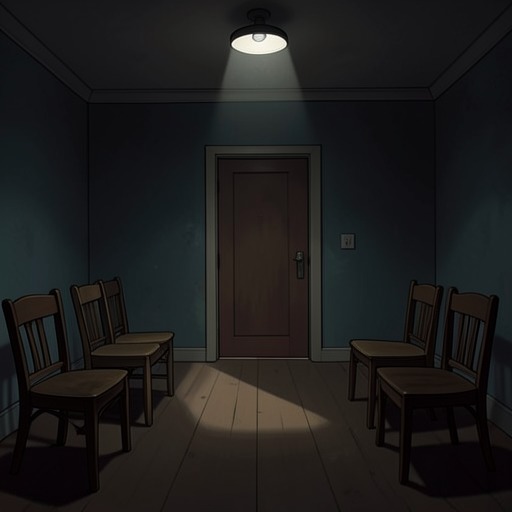
Henry enters despite the shock, his curiosity stronger than his desire to leave. The room looks like an ordinary teenage boy’s bedroom, but its disorder makes it feel inhabited rather than memorialized. A checked duvet lies crumpled at the foot of the bed. The shelves and furniture hold fantasy novels, an acoustic guitar, old vinyl and a record player, a globe, a skateboard, a backpack, a laptop, sports magazines, childhood trophies, a chalkboard, a canvas bearing a portrait of Mozart, and souvenirs from distant places. Dominic’s leather necklaces, marked with anchors, crosses, and skulls, sit with his deodorant on the dresser. The objects make a life legible through its accumulated habits and interests.
Henry notices that he and Dominic wore the same scent. That small, involuntary recognition makes the room more intimate and more difficult for him to regard as merely a collection of possessions. He thinks of it as a lifetime reduced to the dimensions of a bedroom: the stillness preserves what Dominic owned, used, and left behind, while also confronting Henry with the person whose place he has entered in Grace’s life.
A shirt prompts Henry’s sharper realization. Its stain has been sponged away, but it has not been washed; it still carries the smells of Grace, Dominic, and Henry. Grace has not washed Dominic’s clothes or sheets. Henry had taken the lingering, boyish smell around her for a personal quirk or poor hygiene, but the unwashed fabric reveals its source. She wears Dominic’s clothes and deodorant and sleeps in his tangled sheets. The bedroom does not merely contain memories she visits. It is the setting of her daily life, with Dominic’s presence carried on her body and into her nights.
The room offers almost no visible sign of Grace’s independent belongings: no girls’ clothes or shoes, no makeup, only an envelope bearing her name and containing Henry’s unopened letter. He imagines her earlier self, the bright girl in a profile photograph, as having disappeared into the identity she has built around Dominic. The sight produces his interpretation that Grace is living inside the dead boy’s life, and that the ghostly presence in the room is not Dominic but Grace, still physically alive and yet seemingly absent from herself.
What Henry understands—and gets wrong
Grace appears in the doorway and tells Henry, “So now you know.” She takes the shirt from his shaking hands, folds it, returns it to the wardrobe, and rests her forehead against the shelf. She explains that she moved in a month before the accident, after finally finding the courage to run away from her mother. The Sawyers had wanted her to come for years; she calls the day she moved in the best worst day of her life. Her account links the bedroom not only to her loss of Dominic but also to the refuge she had found with his family before the crash.
Henry apologizes and says he does not know how to help. Grace rejects the premise that she is a damaged object needing repair, telling him, “I’m not broken, Henry. I’m not a piece of pottery out of your cabinet. I don’t need to be fixed.” Her words set a limit on Henry’s interpretation: seeing the evidence of her grief does not make him its authority or give him the right to define her as broken. Henry responds by invoking her earlier observation that a person’s bedroom reveals a great deal. To him, the room indicates how profoundly she has lost not only Dominic but the future they might have shared. He understands that his access to her has been partial, but his longing to know more becomes entangled with his jealousy of the life she had with Dominic.
When Henry asks what her bedroom used to look like, Grace explains that before moving in with the Sawyers she had no room of her own; she slept on a couch in her mother’s husband’s basement. Henry tells her that sometimes she seems not to exist. The remark gives voice to his fear, but it also turns his discovery into an accusation: he treats the evidence of Grace’s grief as proof that the person he wants to know has vanished. Grace orders him to leave, repeating, “Get out, get out, get out!” Martin comes to the doorway. Henry says he is going and walks out without resolving the argument.
The rupture and its significance
Outside, Henry sits in the gutter and cries. His feelings are divided: he is hurt, angry, and jealous of a dead boy, while recognizing that the jealousy is unfair. Dominic can no longer love Grace, yet his memory still occupies the room and keeps its hold on her; Henry, alive and present, cannot compete with that preserved intimacy. The encounter’s reversal is therefore not simply that Henry learns where Grace sleeps. He discovers that the closeness he has been pursuing exists alongside a grief and history he has not been allowed to enter, and his attempt to force that knowledge into the open makes him lose the closeness he wanted.
Afterward, Henry knows that entering Dominic’s house was a serious mistake and wants to apologize, but Grace stops appearing outside his locker after school and, for a time, stops appearing at all. When she finally returns to drama class in the second week, she takes her place at the back of the room; teachers also seem intent on keeping the two apart. The discovery thus changes the pattern of their relationship from private pursuit to estrangement. As a scene, the bedroom functions as material evidence rather than an explanation that settles Grace’s grief: the clothes, sheets, and familiar scent show what Henry had failed to understand, while Grace’s refusal to be treated as broken shows why recognition alone cannot repair the breach.